


Table of Contents
Get Custom eCommerce Fulfillment Service
Book a Meeting
How to Reduce Cross-Border Return Shipping Costs
Time: Sep 14,2026 Author: SFC Source: www.sendfromchina.com
An international return can feel like a small parcel with a very large shadow.
The item may be light. The label may look affordable. Then customs forms, brokerage, fuel surcharges, local handling, storage, refund work, and lost resale value join the bill. Suddenly, the return costs more than the original outbound shipment. Sometimes it costs more than the product itself.
That is why the cheapest return is not always the cheapest label. The real goal is to lower the total cost of resolving the return while keeping the customer experience reasonable and protecting the value of the inventory.
For a brand shipping from China, the right answer may be a local return address, a regional hub, a consolidated shipment back to China, a replacement without return, a returnless refund, or a local resale route. The answer changes by country, product value, parcel size, return reason, and recovery value.
This guide breaks down the main cost levers and shows how to build a return-routing system that is cheaper without becoming messy.
What Cross-Border Return Shipping Really Costs
Most teams start with the return label. That is only the first line.
A realistic cross-border return cost can include:
- Return label or customer reimbursement.
- Pickup, drop-off, and domestic first-mile handling.
- International line-haul freight.
- Actual or dimensional weight charges.
- Fuel, peak, remote-area, residential, address-correction, and oversize surcharges.
- Customs documents, duties, VAT, brokerage, and clearance work.
- Local return-hub receiving, scanning, inspection, and storage.
- Consolidation or onward transport to China.
- Refund processing, customer support, and payment fees.
- Repackaging, repair, liquidation, recycling, or disposal handling.
- Lost resale value while the item is in transit or waiting for a decision.
- Replacement shipping if the original issue is handled poorly.
Use this broad formula:
Total return cost = reverse freight + customs and brokerage + local handling + consolidation or onward freight + inventory processing + payment and support cost + lost recovery value
The formula is not meant to create fake precision. It is a reminder not to compare a $12 label with a $4 local handling fee and call the answer complete. A return that arrives cheaply but sits for 45 days can still be expensive.
Why Returns Can Cost More Than Outbound Orders
Outbound shipping usually benefits from planned pick-up, repeat lanes, known packaging, and predictable documents. Returns are less tidy. They arrive from many addresses, in different packaging, with inconsistent labels and unclear condition.
An outbound parcel might travel from one China warehouse to one country using a contracted service. A return might move from a customer to a local carrier, then to a hub, then into a consolidated shipment, then through customs, and finally into a warehouse inspection area. More handoffs mean more opportunities for extra fees and lost information.
The customer also expects a fast answer. Waiting for a low-cost batch movement may save freight but delay a refund. The right design balances both.

First Reduce Avoidable Cross-Border Returns
The lowest-cost return is usually the return that never needs to happen.
This does not mean making the return policy difficult. It means removing the small surprises that cause customers to send products back.
Improve Product Information
Review the reasons customers select when they return a product. Repeated “too small,” “not as described,” or “not compatible” responses usually point to an information problem.
Improve:
- Measurements in both metric and local units.
- Fit notes, model references, and comparison photos.
- Compatibility lists and exclusions.
- Product dimensions and packed dimensions.
- Material, texture, color, and finish descriptions.
- What is included in the box.
- Installation requirements and skill level.
- Realistic delivery dates and import-cost expectations.
A product page that says “fits most models” may sound friendly, but it leaves too much room for guessing. List the exact compatible models. A few extra lines can save a long trip in reverse logistics.
Localize the Buying Experience
Cross-border shoppers do not only compare product prices. They also assess delivery, taxes, duties, currency, language, and the difficulty of a return.
Show the information clearly:
- Selling price in the customer's currency.
- Estimated delivery window.
- Whether duties or taxes are included.
- Return window and return address.
- Who pays return freight for each reason.
- Whether refunds begin at carrier scan, hub receipt, or warehouse inspection.
- Any product restrictions by country.
Clear expectations reduce refused deliveries and “I did not know I would have to pay this” disputes.
Reduce Fulfillment Errors
Some returns are created inside the warehouse. Wrong variants, missing accessories, poor packaging, and incorrect addresses can all trigger a return that should never have existed.
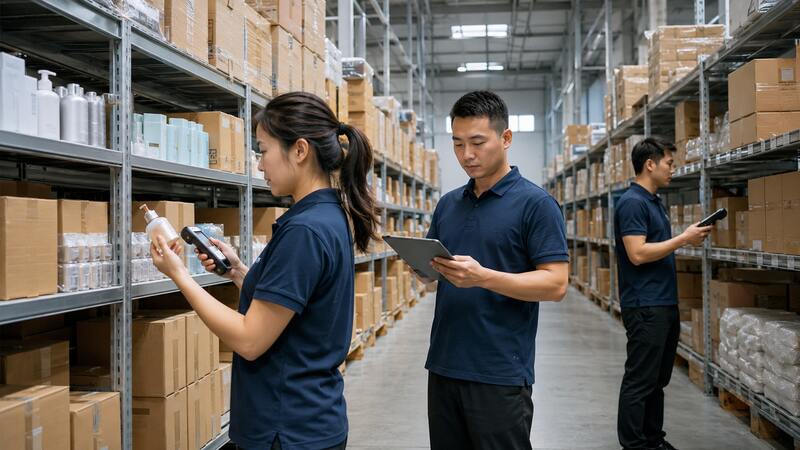
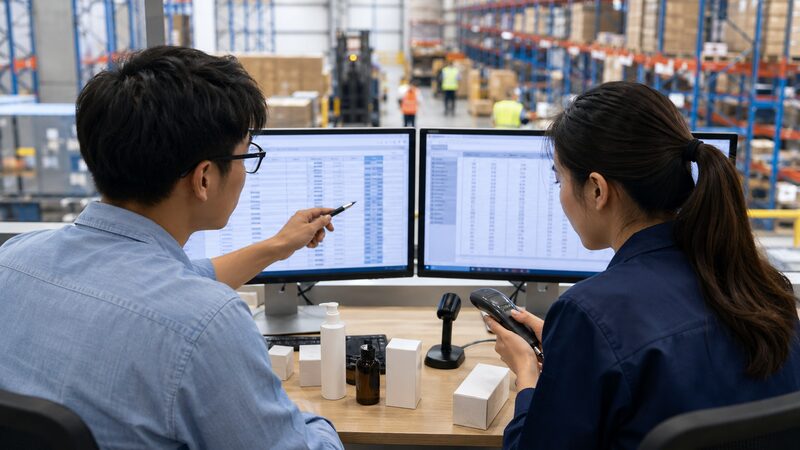
Use barcode scans for SKU and variant verification. Validate addresses before dispatch. Add a pack-out check for high-return products. For delicate goods, use a photo or scan record before sealing the parcel. If a product is frequently returned damaged, review its pack-out rather than treating every case as a customer problem.
SendFromChina's packing and customization work can be part of this prevention layer when packaging, inserts, labels, or product presentation need to change by market.
Turn Return Reasons Into Product Improvements
Group return reasons by SKU, country, channel, supplier, and carrier. Do not only look at the overall return rate.
For example:
|
Pattern
|
Likely improvement
|
|
Too small in one market
|
Add local measurements and fit photos
|
|
Arrived damaged on one carrier lane
|
Improve protection or change service
|
|
Missing accessory for one SKU
|
Add pack-out scan and component checklist
|
|
Not compatible with common device
|
Add a clearer compatibility table
|
|
Unexpected duty or tax
|
Show landed-cost information earlier
|
|
Color not as expected
|
Improve photography and monitor color description
|
Prevention is not a separate marketing project. It is one of the strongest reverse-logistics savings tools.
Choose the Right Return Model
There is no universal best route. Compare each model against product value, return volume, customer location, recovery value, and required speed.
|
Model
|
Best fit
|
Main cost or risk
|
|
Individual return to China
|
High-value, compact, recoverable products
|
High parcel cost, customs friction, long cycle time
|
|
Local return address
|
Steady return volume in one destination market
|
Local rent, handling, storage, and onward movement
|
|
Regional hub and consolidation
|
Several nearby countries or regular return volume
|
Batch delay and extra inventory handling
|
|
Returnless refund
|
Low-value products where recovery costs exceed value
|
Fraud, abuse, and no physical recovery
|
|
Replacement without return
|
Defects or missing parts where a replacement costs less
|
Duplicate inventory and abuse controls
|
|
Local liquidation or resale
|
Bulky, low-value, or slow-to-return products
|
Lower recovery price and channel governance
|
|
Supplier or factory return
|
Repeated defects or warranty-related cases
|
More coordination and traceability work
|
Individual Returns Back to China
Sending every item back to the origin warehouse is simple to explain, but often expensive to operate. It can make sense for a compact product worth $150, $300, or more, especially if the unit is easy to inspect and resell after arrival.
It is less attractive for a $20 product with a $24 return cost. In that case, the label may recover the item but destroy the economics.
Local Return Hubs
A local hub receives returns domestically or regionally. It may inspect, consolidate, refurbish, liquidate, recycle, or hold the items. Only selected inventory moves back to China.
This model can reduce parcel-level international freight, but the hub is not free. Include receiving, storage, labor, software, packaging, domestic transport, and eventual recovery costs in the comparison.
Returnless Refunds and Replacements
For low-value goods, the cost of bringing the product back may exceed its recovery value. A refund without physical return or a replacement without return can be cheaper and faster.
These options require controls. Use them only where the product is safe to keep, the policy and applicable rules allow the treatment, customer history supports it, and the abuse risk is acceptable. High-value, serial-controlled, data-bearing, safety-sensitive, regulated, or authenticity-sensitive products usually need a different route.
Use Local Return Hubs Without Creating a New Cost Center
A local return address sounds like an easy fix. It is not automatically cheaper.
Choose a hub market by looking at:
- Order volume and return volume.
- Customer density and carrier coverage.
- Domestic label rates.
- Storage and labor costs.
- Duty and tax treatment.
- Distance to secondary sales channels.
- Consolidation frequency and line-haul options.
- Product restrictions and handling requirements.
- Expected recovery value.
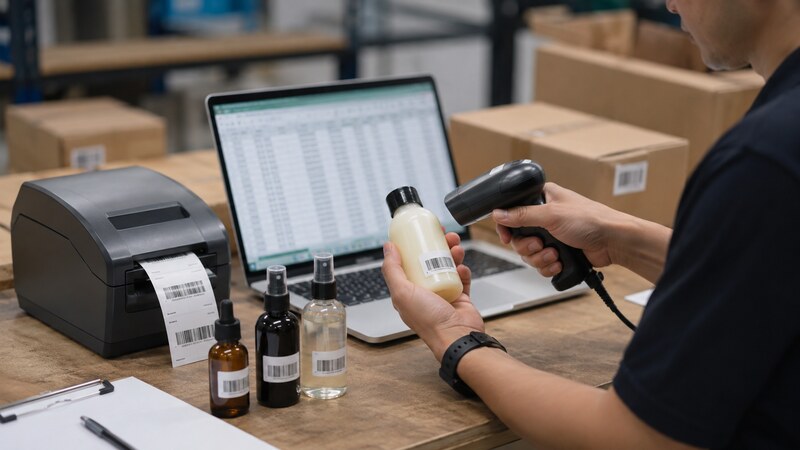
The hub should have clear lanes for unopened parcels, inspection, saleable stock, repair, dispute, safety hold, and non-saleable goods. It should also have a system status that matches each physical location.
A Simple Hub Break-Even Test
Compare two routes over the same period:
Individual China-return cost = return labels + customs + handling + inspection + storage + recovery freight
Hub cost = local labels + hub receiving + storage + inspection + consolidation + onward freight + hub overhead
The hub becomes more attractive when return volume is steady enough to spread fixed costs and when parcels can be consolidated or recovered locally.
Do not open a hub because a competitor has one. Test the numbers with your own countries, products, and return reasons. If you need a warehouse-based partner, review the scope of China warehousing alongside the local-hub model so storage and recovery work are not treated as separate worlds.
Consolidate Returns Back to China
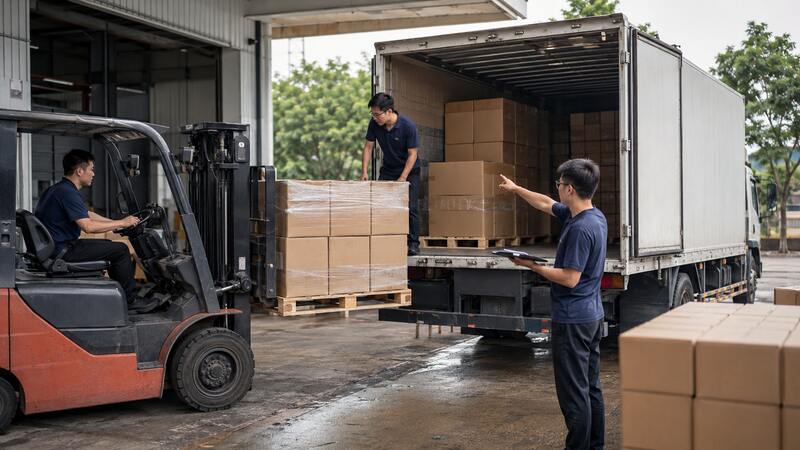
Consolidation is one of the clearest ways to lower the average freight cost when individual returns are too expensive.
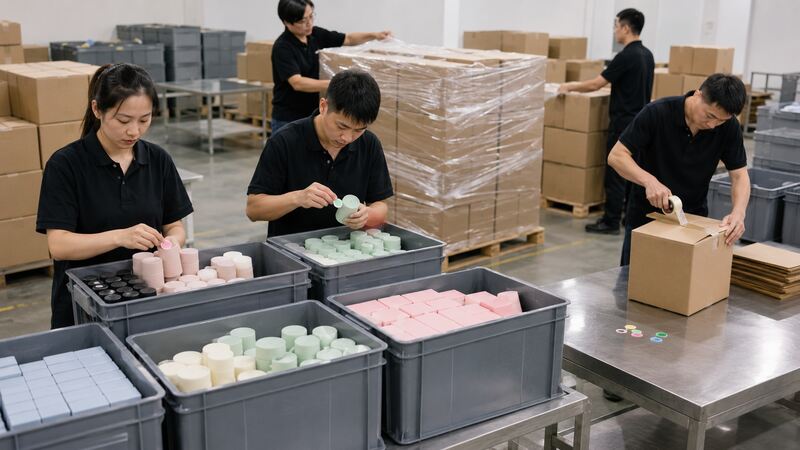
The process usually looks like this:
- Issue a local return label or drop-off instruction.
- Receive and scan the return at the regional hub.
- Inspect identity, condition, value, and product restrictions.
- Hold eligible units in a consolidation queue.
- Group parcels by destination, SKU family, service class, or handling type.
- Pack the batch for a bulk movement to China or another recovery location.
- Reconcile the batch against item-level return records.
The Trade-Offs
Consolidation can lower average freight, but it adds time. That time may affect refund speed, customer satisfaction, seasonal value, and storage cost.
Set rules for:
- Minimum batch size or weight.
- Maximum holding days.
- High-value units that should not wait.
- Batteries, liquids, fragile goods, and restricted items.
- Customs descriptions and item-level records.
- Damage protection inside the bulk carton.
- Who approves the dispatch of a batch.
A 10-day consolidation window may work for stable home goods. It may not work for a premium item where the customer expects a quick refund or for a seasonal product whose value drops each week.
Compare Carriers and Service Levels Properly
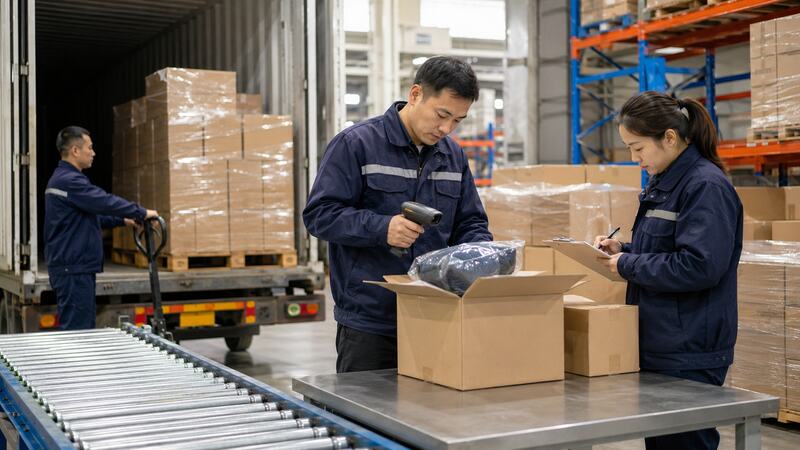
Do not compare only the base transportation price. Ask what the invoice looks like after the parcel has traveled through the real lane.
Review:
- Actual weight and dimensional weight.
- Parcel dimensions and packaging density.
- Origin and destination zones.
- Remote-area and residential delivery rules.
- Fuel, peak, oversize, handling, and address-correction surcharges.
- Pickup versus drop-off charges.
- Tracking and signature options.
- Insurance and claims handling.
- Economy postal, parcel, express, and freight options.
- Customs-document support.
|
Carrier comparison field
|
Question to ask
|
|
Billable weight
|
Is the return billed on actual or dimensional weight?
|
|
Service level
|
What tracking and delivery promise applies to the return?
|
|
Customs support
|
Who prepares documents and answers clearance questions?
|
|
Surcharges
|
Which fuel, remote, oversize, peak, and residential fees apply?
|
|
Claims
|
What evidence, deadlines, and exclusions apply?
|
|
Consolidation
|
Can returns be grouped by destination or product class?
|
|
Pickup method
|
Is a drop-off network cheaper than customer collection?
|
|
Billing
|
Are residential, address-correction, and brokerage fees itemized?
|
Run a lane-level comparison using real historical parcels. A carrier can be cheap for small, dense parcels and expensive for cartons with low density. Another may offer a good base price but high remote-area fees.
Reduce Dimensional Weight and Damage Risk
Packaging can save money twice: first by reducing billable volume, and again by reducing damage-related returns.
Review:
- Mailer and carton sizes by SKU.
- Void fill and unnecessary inserts.
- Corner protection for fragile goods.
- Reusable return packaging where it makes sense.
- Return labels that fit the actual package.
- Protective inserts that prevent movement without adding too much volume.
- Outer-carton strength for consolidated batches.
Do not chase the smallest possible box. A carton that saves $1 in dimensional freight but causes a $40 damage claim is not efficient. Test packaging against the parcel's actual handling environment and destination lanes.
For returns, keep packaging instructions separate from outbound instructions. The customer may not have the original carton. The local hub may need a standard protective pack for moving items back to China. The best return package is the smallest safe package, not simply the smallest package.
Set Returnless Refund and Replacement Rules Carefully
Returnless refunds are useful in narrow situations, not as a blanket policy.
Consider a non-return resolution when:
- The product's value is below the total recovery cost.
- The product cannot be economically resold after cross-border movement.
- Local disposal or retention is safe and approved.
- Customer history and fraud controls support the decision.
- The product does not require physical inspection.
- The policy and local requirements permit the treatment.
Use a simple threshold concept:
Use a non-return resolution when expected recovery value < reverse logistics cost + processing cost + expected risk cost
The threshold should vary by SKU, country, channel, and customer profile. A $15 accessory may qualify in one lane while a $15 regulated item may require physical control.
Replacement without return can work when the replacement cost is lower than the return route and the original product does not require recovery. Build controls for repeated claims, serial items, and high-risk customers. A fast replacement is not a saving if it creates a second order and an unreconciled original unit.
Use DDP and Customs Planning to Avoid Expensive Surprises
Customer-paid import charges can cause refused deliveries, return-to-sender events, and disputes. Those events often cost more than a planned return because the parcel has already crossed a border and may need extra handling.
Review how your delivery terms affect:
- Who pays duties and taxes.
- Who prepares commercial invoices and customs data.
- What happens when a customer refuses delivery.
- Whether the parcel can be re-imported efficiently.
- How VAT or duty treatment applies to returned goods.
- Whether a broker or carrier charges an additional clearance fee.
- How refunds account for taxes, duties, and shipping.
DDP can improve checkout clarity and reduce some refusal risk in particular lanes. It also changes the seller's cost and compliance responsibilities. The correct Incoterm, tax, customs, and document approach depends on the country, product, seller setup, and carrier. Model the complete lane rather than assuming one delivery term solves every return problem.
Recover Inventory Before It Loses More Value
Return freight is only part of the recovery story. The item can lose value while waiting.
Once a return reaches a hub or China warehouse:
- Receive and identify the unit.
- Photograph the parcel and product before changing it.
- Inspect completeness, condition, and function as required.
- Grade it as saleable, open-box, repairable, liquidation, hold, or reject.
- Repack or refurbish only within approved scope.
- Retest after work.
- Update the WMS, OMS, ERP, store, marketplace, refund, and finance records.
Keep new, open-box, used, and refurbished inventory separate. A recovered unit that is digitally available as new can create a costly second return. A good unit that remains blocked can create lost sales.
Use API and integration controls where possible. Manual retyping across several systems is a quiet source of inventory and refund errors.

Build a Cost Model for Each Market
Use real return data by destination country and product family. At minimum, include:
- Product selling price and cost.
- Return probability.
- Return reason.
- Parcel weight and dimensions.
- Carrier rate and surcharges.
- Customs and brokerage assumptions.
- Local hub fee.
- Consolidation interval.
- Inspection and storage cost.
- Expected recovery value.
- Refund or replacement amount.
- Fraud and exception risk.
Illustrative Example
Imagine a $35 product sold from China to a customer in the United States.
|
Route
|
Illustrative total
|
|
|
Individual return to China
|
$18 freight + $5 handling + $3 customs work + $4 inspection
|
$30
|
|
Local hub plus batch movement
|
$7 domestic label + $4 hub handling + $2 storage + $5 consolidated freight + $3 inspection
|
$21
|
|
Returnless refund
|
$35 refund + $1 support cost
|
$36
|
|
Replacement without return
|
$14 replacement fulfillment and freight + $1 support cost
|
$15
|
These figures are examples, not quotes. In this scenario, the replacement route appears cheaper, but it may not be suitable if the original product is high-risk, defective in a way that requires inspection, serial-controlled, or subject to a supplier claim. The hub route may preserve a recovery opportunity. The returnless refund may be the cleanest option for a product that has no safe or profitable recovery path.
The right model is the one that fits the product and the policy, not simply the smallest number in a table.
3PL Fees and SLA Terms to Negotiate
“Returns processing included” is not enough for a 3PL quote.
Ask for an itemized scope covering:
|
Contract item
|
What to define
|
|
Label generation
|
Countries, carriers, service levels, and who pays the label
|
|
Local receiving
|
Scan-in, parcel photos, timestamp, and exception handling
|
|
Inspection
|
Visual, completeness, serial, functional, and category-specific checks
|
|
Consolidation
|
Holding days, minimum batch size, packing method, and dispatch approval
|
|
Customs support
|
Documents, broker communication, and re-import assistance
|
|
Repackaging
|
Materials, labor, labels, seals, and approval rules
|
|
Storage
|
Free days, daily rate, condition-level storage, and aging reports
|
|
Disposition
|
Restock, refurbish, liquidation, recycling, supplier claim, or reject routes
|
|
Systems
|
WMS, OMS, ERP, store, marketplace, and refund status timing
|
|
SLA
|
Clock start, working calendar, target time, and exclusions
|
|
Evidence
|
Photos, scans, test records, retention, and access
|
|
Reporting
|
Country, SKU, reason, route, cost, recovery value, and exception aging
|
Ask how the provider prices standard and nonstandard returns. Ask what happens when a product has no local route, no valid RMA, a missing serial, a damaged battery, or a customs problem.
When comparing China fulfillment pricing, add return handling to the same model. A provider with a slightly higher outbound fee may still be cheaper overall if it prevents errors, consolidates returns well, and recovers inventory faster.
KPIs That Show Whether Costs Are Falling
Track both cost and quality. A lower freight bill is not a saving if refunds slow down or second returns increase.
- Return rate by country and SKU: Shows where the problem is concentrated.
- Avoidable-return rate: Measures preventable reasons such as wrong item, missing part, or unclear product information.
- Average reverse freight per return: Tracks the transportation piece.
- Total cost per return: Includes handling, customs, storage, and support.
- Local-hub cost per unit: Tests whether the hub is becoming efficient.
- Consolidation savings per batch: Compares individual and bulk movement.
- Returnless-refund rate and abuse rate: Measures the trade-off between speed and control.
- Time from receipt to refund: Protects the customer experience.
- Time from receipt to resale-ready status: Protects recovery value.
- Recovery value per returned unit: Shows what the process actually saves or recovers.
- Customs exception rate: Exposes document and lane problems.
- Damaged-in-return rate: Shows whether packaging or carrier selection needs work.
- Return shipping cost as a percentage of order value: Makes product-level decisions easier.
Review the metrics by country, product category, carrier, return reason, and route. An overall average can hide a very expensive lane.
Common Mistakes
Comparing Base Freight Only
Fuel, remote-area, residential, peak, dimensional-weight, brokerage, and address-correction fees can change the result. Compare the likely invoice, not only the headline rate.
Sending Every Return Directly to China
This is simple but can be uneconomic for low-value goods. Compare local hubs, consolidation, replacement, returnless resolution, and local recovery.
Opening a Hub Without Enough Volume
Rent and labor can erase the freight savings. Use a break-even model based on actual return volume and handling requirements.
Using Returnless Refunds for High-Risk Products
High-value, serial-controlled, regulated, data-bearing, and safety-sensitive products often need physical control or qualified review.
Ignoring Dimensional Weight
A light but bulky carton can be expensive. Review packaging design and the carrier's divisor and billing rules.
Making Customers Pay Unexpected Import Charges
Surprise duties and brokerage can cause refusals and disputes. Show the delivery and return terms clearly, and model the resulting seller responsibilities.
Delaying Inspection
Inventory loses value while waiting. Set a service target for receiving, inspection, decision, and release.
Mixing Return Routes With No Reporting
If local, China-bound, replacement, and returnless cases share one unstructured process, you cannot see which route saves money.
Treating Every Product the Same
Apparel, electronics, batteries, liquids, fragile goods, and high-value items need different handling and risk rules.
A 30-Day Cost-Reduction Plan
Week 1: Map the Current Cost
Export return volume, destination, SKU, value, reason, carrier, label cost, surcharges, customs cost, processing fees, refund time, and recovery result. Separate avoidable returns from unavoidable returns.
Week 2: Build the Route Matrix
For each product family and country, compare individual China return, local hub, consolidation, replacement, returnless resolution, liquidation, and supplier return. Include product restrictions and approval rules.
Week 3: Pilot One or Two Levers
Test a local return address, a consolidation lane, right-sized packaging, a limited returnless rule, or a replacement workflow. Keep the pilot narrow enough to measure.
Week 4: Review Total Cost and Quality
Compare freight, handling, refund time, recovery value, customer complaints, customs exceptions, abuse, and second returns. Expand only when the complete result is better.
Conclusion
Reducing cross-border return shipping costs is not about finding one magical carrier or forcing every customer to send a parcel back to China. It is about designing the right answer for each product, country, and return reason.
Start by preventing avoidable returns through better product information, localization, accurate fulfillment, and stronger packaging. Then route unavoidable returns intelligently. Use local hubs where volume supports them. Consolidate eligible parcels. Compare carriers using the full invoice, not the base rate. Use returnless refunds and replacements only where the risk and economics make sense. Finally, recover inventory quickly and keep condition data synchronized across systems.
The best return strategy usually combines several small improvements. A clearer size chart, a smaller carton, a better customs message, and a weekly consolidation run may each save a little. Together, they can change the shape of the whole operation.
If you want to review the right mix of fulfillment, local handling, consolidation, and return processing for your products, you can request a fulfillment and returns review.
FAQs
1. Why are cross-border returns so expensive?
They can include reverse freight, dimensional-weight charges, customs and brokerage, fuel and remote-area surcharges, local handling, storage, inspection, refund support, and lost inventory value. The return may also pass through more handoffs than the original shipment.
2. Should I send international returns back to China?
Not automatically. Sending a return to China may suit high-value, compact, recoverable products. Low-value or bulky products may be better handled through a local hub, consolidation, replacement, returnless resolution, liquidation, or another approved route.
3. Is a local return address cheaper than international return shipping
It can be, especially when return volume is steady and domestic labels are much cheaper. But local rent, labor, storage, inspection, consolidation, and onward freight must be included before making the comparison.
4. How does return consolidation reduce cost?
It groups multiple local returns into a larger shipment instead of moving every parcel internationally on its own. This can reduce the average freight cost, but it adds storage time, handling, customs planning, and possible delay before the product reaches the recovery warehouse.
5. When should an ecommerce brand use a returnless refund?
Consider it when the product's expected recovery value is lower than reverse logistics, processing, and risk costs, and when the product is safe to keep without physical inspection. Use controls for fraud, serial items, high-value products, and regulated or safety-sensitive goods.
6. Does DDP reduce cross-border return problems?
DDP can reduce some customer confusion and refused deliveries by making import-cost responsibility clearer. It also changes the seller's cost and compliance responsibilities. The correct approach depends on the country, product, seller setup, carrier, and customs process.
7. Who should pay international return shipping?
The answer depends on the return reason, sales channel, customer promise, product issue, carrier responsibility, and applicable rules. Define separate treatment for buyer remorse, wrong item, defect, damage in transit, and fulfillment error rather than using one rule for every case.
8. How can packaging reduce return shipping costs?
Right-sized packaging can reduce dimensional weight, while better protection can reduce damage-related returns. Review carton sizes, void fill, inserts, corner protection, and consolidated-batch packaging. The smallest package is not useful if it causes more damage.
9. What should a 3PL charge for cross-border returns?
Ask for itemized charges for labels, local receiving, inspection, photography, storage, consolidation, bulk freight, customs support, repackaging, repair, disposal, and system updates. Also define minimum fees, exception fees, SLA targets, evidence, and storage aging.
10. Which KPIs should I track for international return costs?
Track return rate by market and SKU, avoidable-return rate, total cost per return, reverse freight, consolidation savings, hub cost per unit, refund time, resale-ready time, recovery value, customs exception rate, abuse rate, damaged-in-return rate, and second-return rate.
 Post Views:9
 TAGS:
TAGS:
Copyright statement: The copyright of this article belongs to the original author. Please indicate the source for reprinting.
Previous Post
Next Post
Ecommerce Return Inspection: A 7-Step Quality Grading Process
TAGS
Hot Research
Get Custom eCommerce Fulfillment Service
Book a Meeting
Get a Custom China Fulfillment Solution with FREE Storage for 30 Days
Want to know about our services, fees or receive a custom quote?
 Want to know about our services, fees or receive a custom quote?
Please fill out the form on the right and we will get back to you within a business day.
The more information you provide, the better our initial response will be.